
What we have built.
Outcomes, not anecdotes.
Pulled from the projects above. Real numbers from production deployments - not portfolio mockups.
Where we have shipped.
We focus on engineering quality over sector specialisation - but these are the verticals where we have shipped repeated, comparable work.
SaaS & B2B Platforms
Multi-tenant apps, subscription flows, role-based dashboards, and enterprise integrations.
Consumer Mobile
iOS and Android apps shipped on React Native, with native modules where they earn their place.
Travel & Hospitality
Booking flows, inventory engines, and customer-facing portals built for real load.
AI & Data Workflows
Document processing, RAG chatbots, and structured-extraction pipelines in production.
Field Operations
Offline-first mobile, automated reporting, and image-recognition workflows for distributed teams.
Internal Tools
Admin panels, ops dashboards, and pipelines that make the team faster, not the customer.
Questions about this work
Which Codevibe case studies can I read in full?
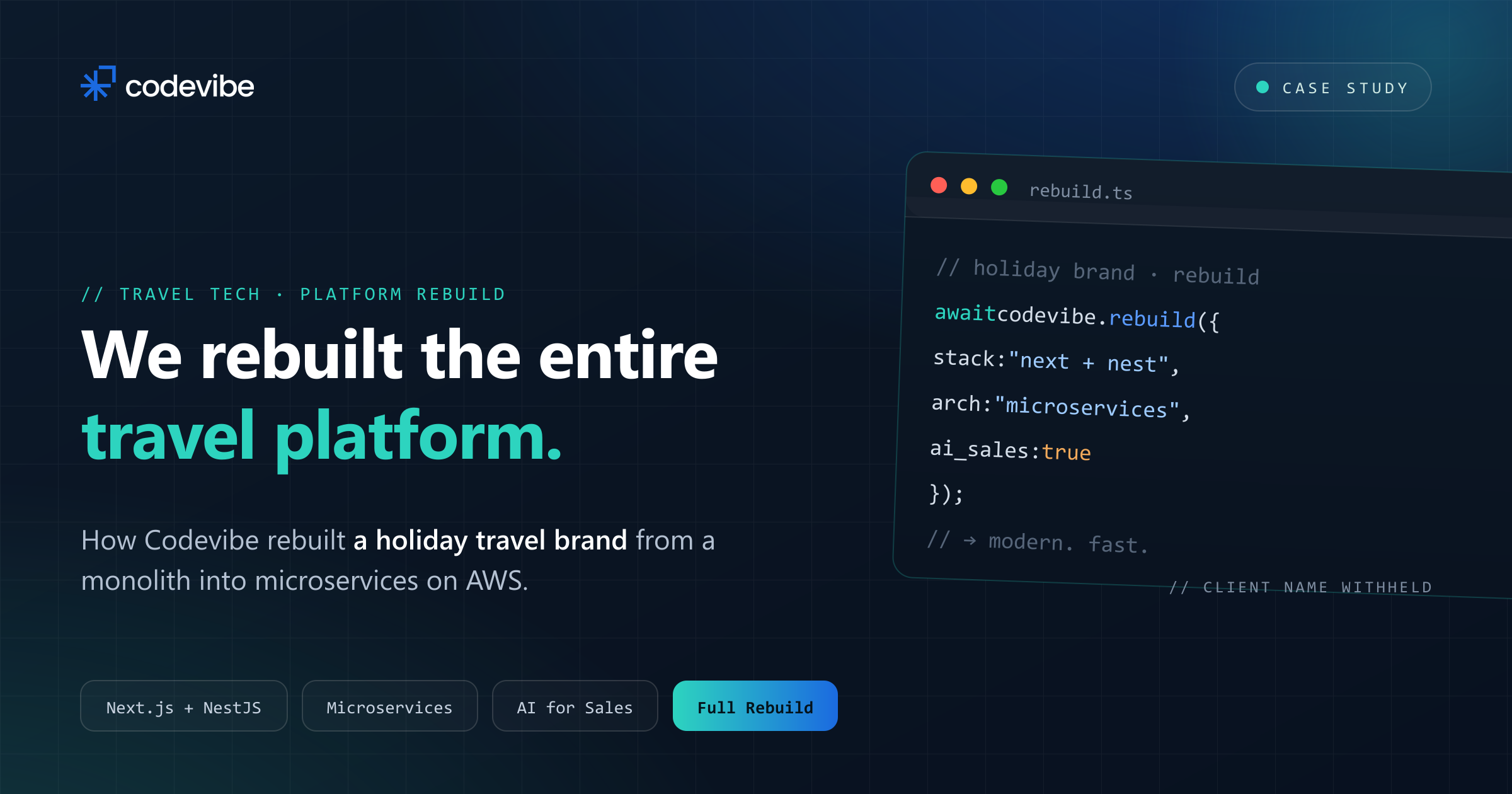
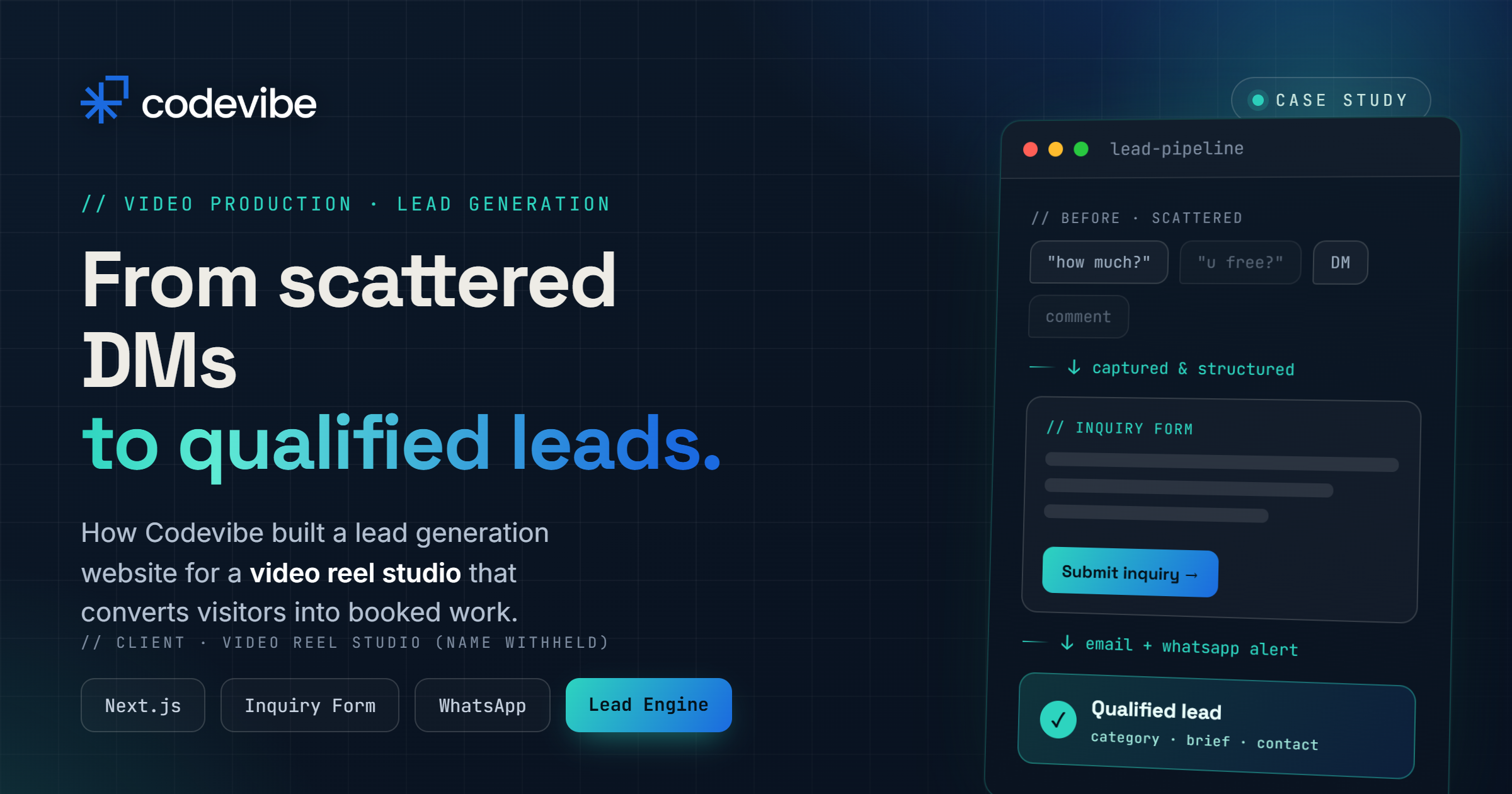
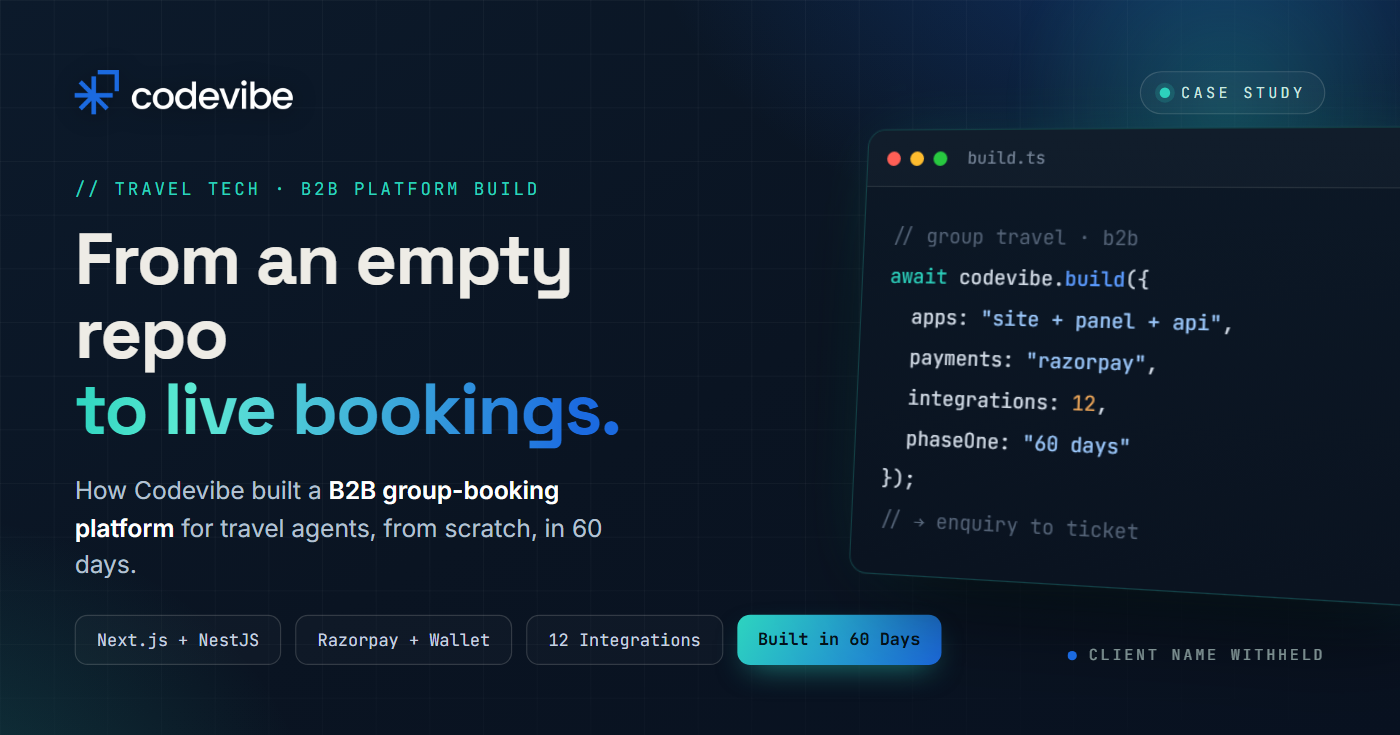
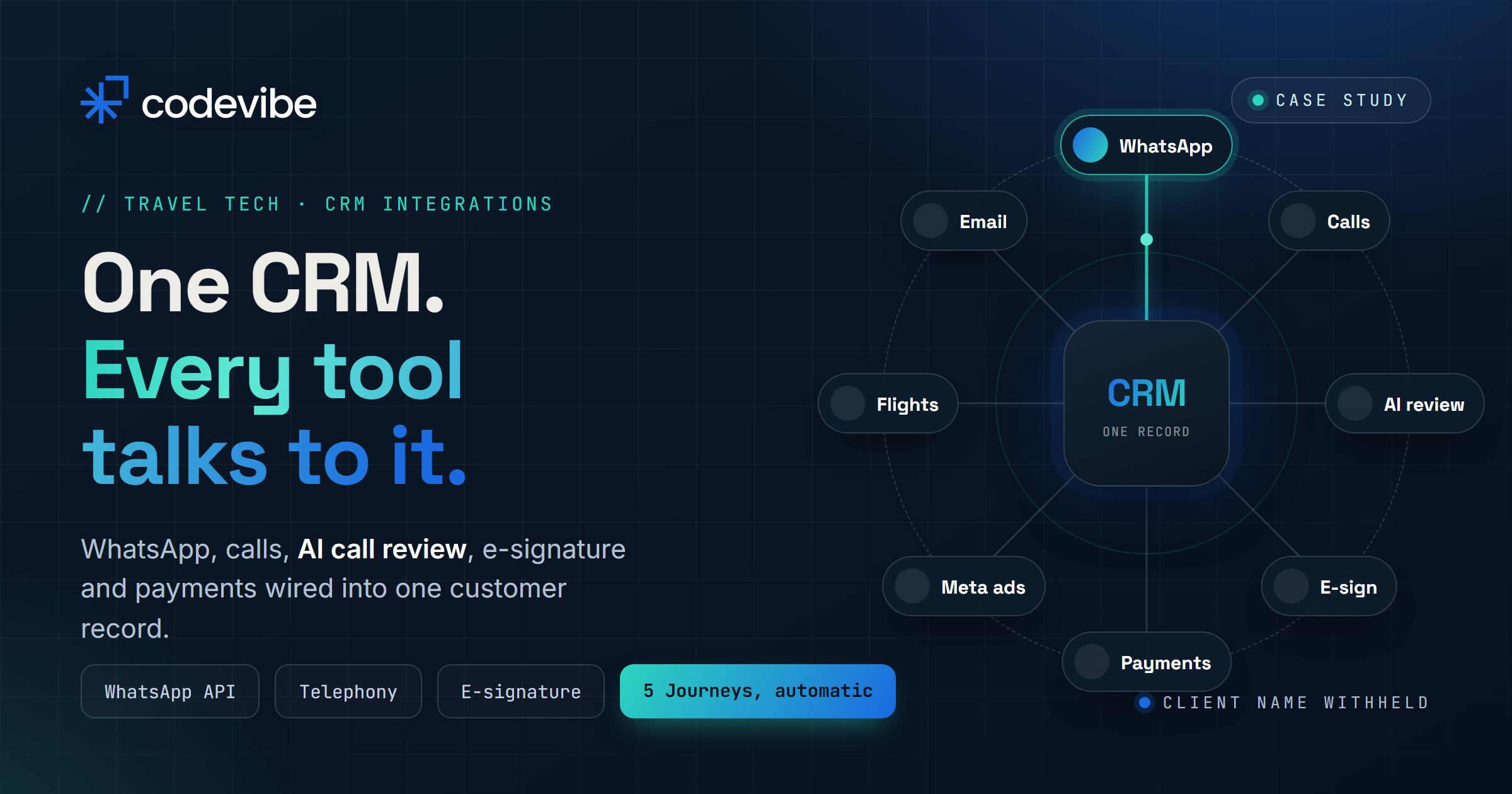
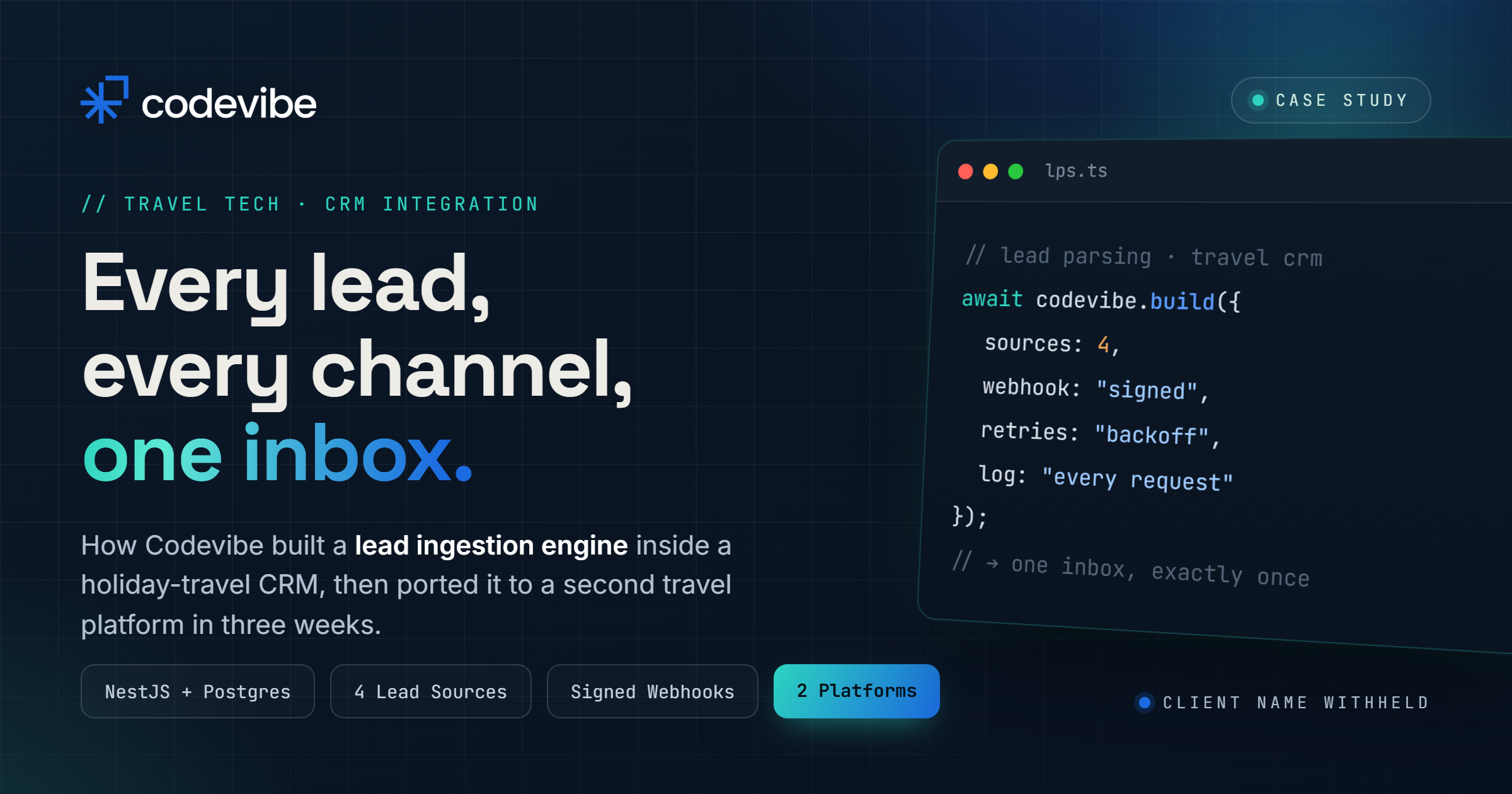
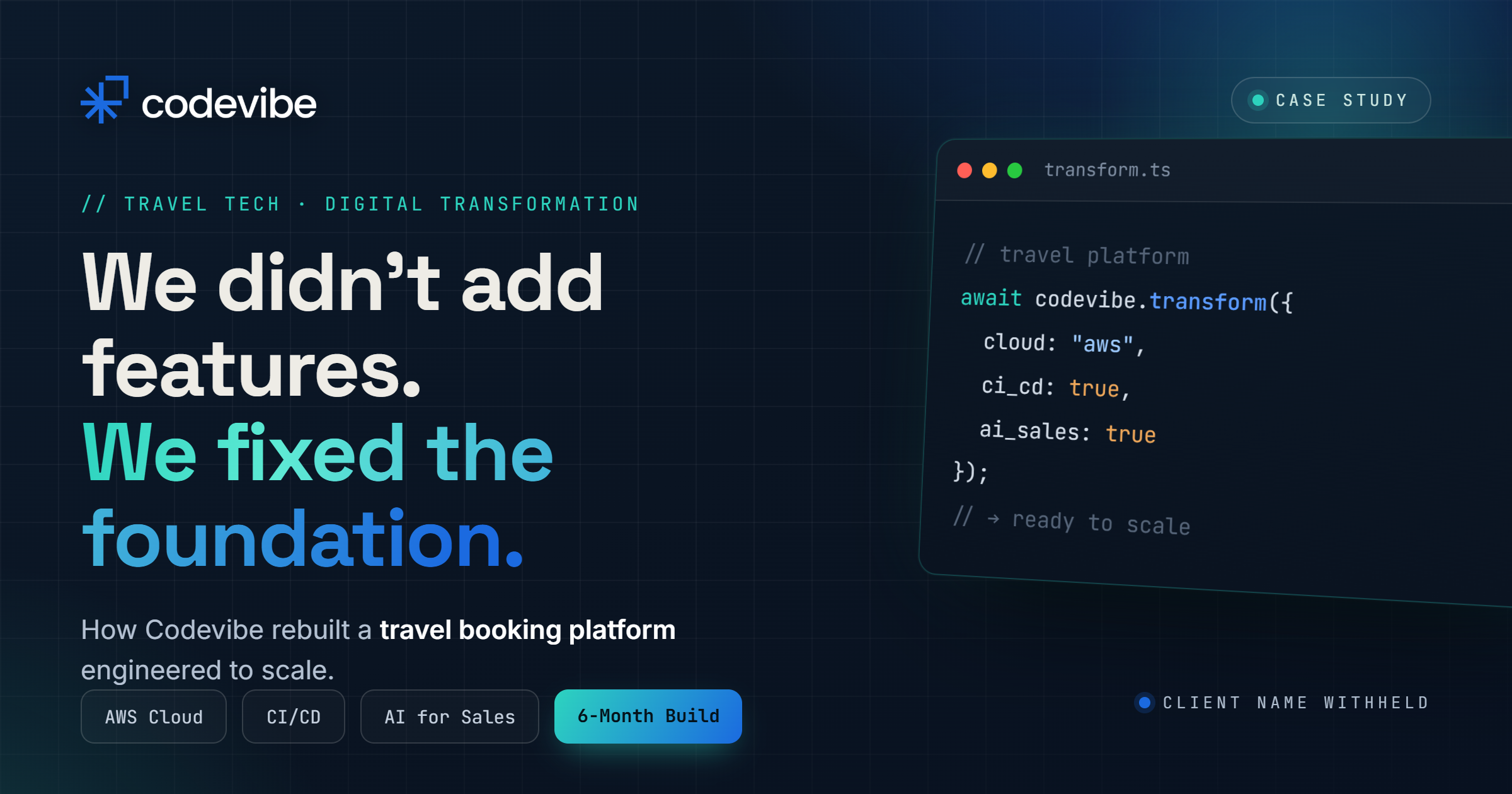
Six are published as complete write-ups. The travel platform rebuild for a holiday brand covers a customer web app, sales CRM and admin rebuilt on Next.js, NestJS and React microservices on AWS, with AI automating the sales pipeline. The travel platform transformation covers a six-month engagement for a travel booking company: AWS cloud migration, CI/CD automation, a modular architecture and AI-driven sales tooling. The lead generation study covers a website for a video reel production service, built on Next.js. The B2B group-booking platform study covers a travel platform built from scratch for a group-travel operator who asked not to be named: public site, role-based panel, NestJS API and twelve integrations. The Lead Parsing System study covers a NestJS lead-ingestion module built inside a holiday-travel CRM and ported to the group-booking platform: one webhook per source for website forms, Meta lead ads, WhatsApp and landing pages. The Connected Travel CRM study covers the integrations wired into a holiday travel company’s CRM: WhatsApp, cloud telephony, AI call review, e-signature, payment gateways and Meta, so that publishing an itinerary, taking a payment or ending a call triggers the next step on its own.
Why are some Codevibe case studies anonymised?
Every client on this page is described by sector rather than named. Some engagements are under confidentiality agreements and the others are treated the same way, so each case study gives the sector, technology stack, timeline, problem and outcome without identifying the business.
What technologies do these projects use?
Next.js and React on the frontend, NestJS on Node.js for APIs and microservices, PostgreSQL for data, and AWS for infrastructure, with LLM-based automation where it earns its place. Integrations run through signed webhooks: Razorpay payments, Meta lead ads and WhatsApp. The holiday brand rebuild is a legacy migration, moving an Angular, .NET and MS Access monolith onto NestJS microservices on AWS.
How long do Codevibe projects typically take?
It depends on scope. The B2B group-booking platform went from an empty repository to live bookings in 60 days, the lead parsing module was ported to a second travel platform in three weeks, and the travel platform transformation ran for six months. A lead generation website like the video production study typically ships in 3 to 5 weeks.
What kinds of problems does Codevibe take on?
The common thread is systems that have outgrown their original build, or never had one: monoliths that buckle under load, leads scattered across channels, and sales processes that need automating. The work on this page spans a full platform rebuild, a six-month transformation, a B2B platform built from scratch, a lead ingestion module and a lead generation website.
Ready to build?
Tell us what you are working on. We will respond within one business day with an honest assessment and a recommended path forward.